
Break Up With the Myth: Is He Actually an Alpha, or Just Emotionally Unavailable?
So you went through a break up and now you're replaying every moment, wondering — was he just an "alpha male" who needed space, or was something deeper (and way more toxic) going on? You're not alone, sis. The line between confidence and avoidance is blurry on purpose — and a lot of men (and the internet) benefit from keeping it that way. Let's clear it up.

What Is an Attachment Style, Anyway?
Before we get into the alpha myth, let's talk about attachment styles — because this is where everything starts to make sense.
Attachment theory, originally developed by psychologist John Bowlby, describes how we connect with others in relationships. There are four main types: secure, anxious, avoidant, and fearful-avoidant (also called disorganized).
Most of us have a mix. But people with a strong avoidant attachment style have a deeply ingrained habit of pulling away — especially when things get emotionally real.
And here's the thing: avoidant behavior can look a lot like "alpha" energy on the surface.
The "Alpha Male" Fantasy — What It Actually Means
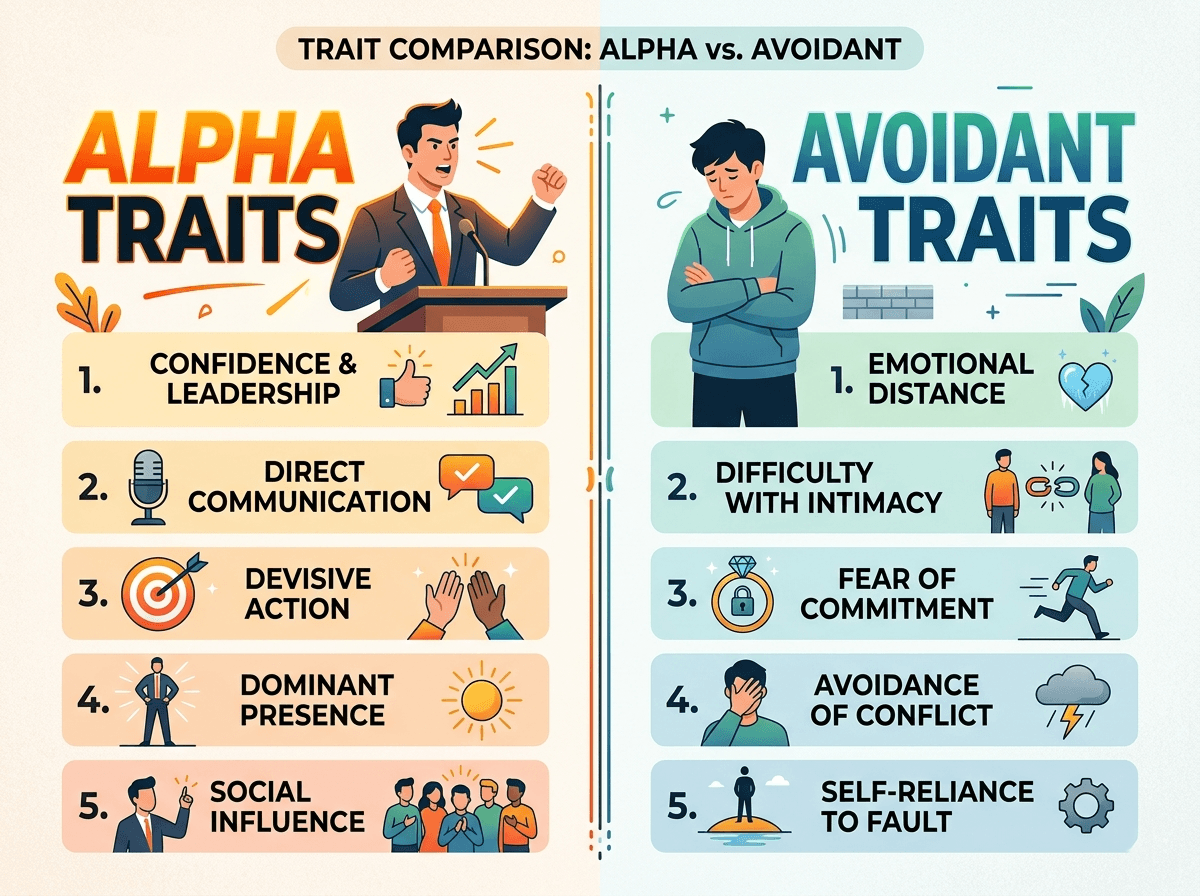
The internet loves to brand emotionally unavailable men as alphas. Strong, stoic, in control. Never too available. Never too emotional.
But let's be honest — a lot of what gets called "alpha" behavior is just fear dressed up in confidence.
Real confidence looks like:
Being emotionally present without losing yourself
Communicating clearly, even when it's uncomfortable
Choosing someone — consistently, not just when it's convenient
If he disappeared after your best dates, only texted at 11 PM, or made you feel like you were the problem for wanting more — that's not alpha. That's avoidant. And it's a very common reason why a break up leaves you feeling confused rather than clear.
Signs You Were Dating an Avoidant (Not an Alpha)
Here's a quick checklist. Be honest with yourself.
He might have been avoidant if he:
Pulled away every time things got deeper or more serious
Called emotional conversations "too much" or "drama"
Was charming and warm — then suddenly cold and distant
Never fully committed, but never fully left either
Made you feel anxious just waiting for a text back
Framed his emotional walls as "being independent" or "not needing anyone"
Sound familiar? This hot-and-cold cycle is one of the most toxic patterns in modern dating — and it's exhausting. The worst part? It's designed (even if not consciously) to keep you hooked.
Why This Pattern Feels So Hard to Break Up With
There's a reason you kept going back, kept making excuses, kept wondering if you were the problem. Avoidant partners create what psychologists call an anxious-avoidant trap.
The more they pull away, the more you chase. The more you chase, the more "smothering" you seem — to them and to yourself. It's a loop. And it can make even the strongest woman question her self-worth.
This is one of the most toxic relationship dynamics out there — not because he's a villain, but because the cycle keeps both of you stuck.
The love was real. The pattern was still harmful.
That's the hard truth nobody talks about after a break up. You can deeply love someone and still recognize that the relationship was not healthy for you.
He's Not Going to Change — But You Can
Here's what the alpha mythology doesn't tell you: avoidant attachment is not a personality trait. It's a coping mechanism — usually formed in childhood. And unless he's actively working on it (in therapy, with real self-awareness), it won't change just because you love him hard enough.
You cannot love someone into secure attachment. That's not how it works.
What you can do is start recognizing your own patterns. Ask yourself:
Why was inconsistency something I was willing to work around?
Do I confuse emotional unavailability with mystery or depth?
What does a genuinely secure, loving relationship feel like — and would I even recognize it?
These are uncomfortable questions. But they're the ones that will actually change your love life.
Healing After a Toxic Break Up — Where to Start
The break up is not the end of the story — it's the beginning of getting back to yourself.
A few things that genuinely help:
1. Name what happened. Stop calling it "complicated." He was avoidant. The dynamic was anxious-avoidant. Naming it removes the mystery and your guilt.
2. Go no contact (or low contact). Staying connected keeps you in the loop of hope. You need space to actually feel the break up — not numb it with crumbs of attention.
3. Work on your own attachment style. Books like Attached by Levine & Heller are a great starting point. Therapy is even better.
4. Remind yourself daily — literally daily — of your worth. This is where small rituals matter. Some women swear by journaling. Others use physical anchors — like a bracelet they wear as a reminder of a promise they've made to themselves.
5. Rebuild slowly. Don't jump into the next relationship as a distraction. Sit with yourself. Get boring. Get stable. It's actually beautiful.
The Real Question to Ask After a Break Up
Not "was he an alpha or an avoidant?"
The real question is: Was this relationship bringing out the best in you — or constantly making you question yourself?
Because genuine, secure love doesn't make you feel like you're too much. It doesn't make you analyze every text. It doesn't require you to shrink.
You deserve a love that is clear, consistent, and warm. Not a puzzle you're constantly trying to solve.
And that starts with you — not with understanding him better.
Final Thoughts
The post-break up spiral of "but was he an alpha?" is a trap. It keeps your focus on decoding him instead of healing yourself.
He was human. He had wounds. And the relationship had a toxic dynamic that wasn't serving either of you.
Now it's time to serve yourself.
You don't need to understand him to move forward. You just need to decide that you come first from here.
You've got this, sis.
📌 Save this article for the next time you catch yourself making excuses for hot-and-cold behavior. And share it with a friend who needs to hear this.