
No Contact vs. Ghosting: The Difference That Changes Everything About Moving On
If you've ever gone silent after a breakup — or had someone go silent on you — you know how confusing it can feel. Is this no contact? Is this ghosting? Are they the same thing? Spoiler: they are absolutely not. Understanding the difference between no contact and ghosting is one of the most important things you can do for your healing right now.
They Both Look Like Silence. They Are Not the Same Thing.
From the outside, both no contact and ghosting look identical. One person stops responding. The texts go unanswered. The silence stretches on. But the intention behind that silence? Completely different.
No contact is a deliberate, self-protective decision to stop communicating with an ex so you can heal without interruption. It's something you choose for yourself.
Ghosting is disappearing without explanation — usually mid-relationship or mid-conversation — leaving the other person confused, hurt, and looking for answers that never come. It's something done to someone else.
That distinction matters more than you might think.
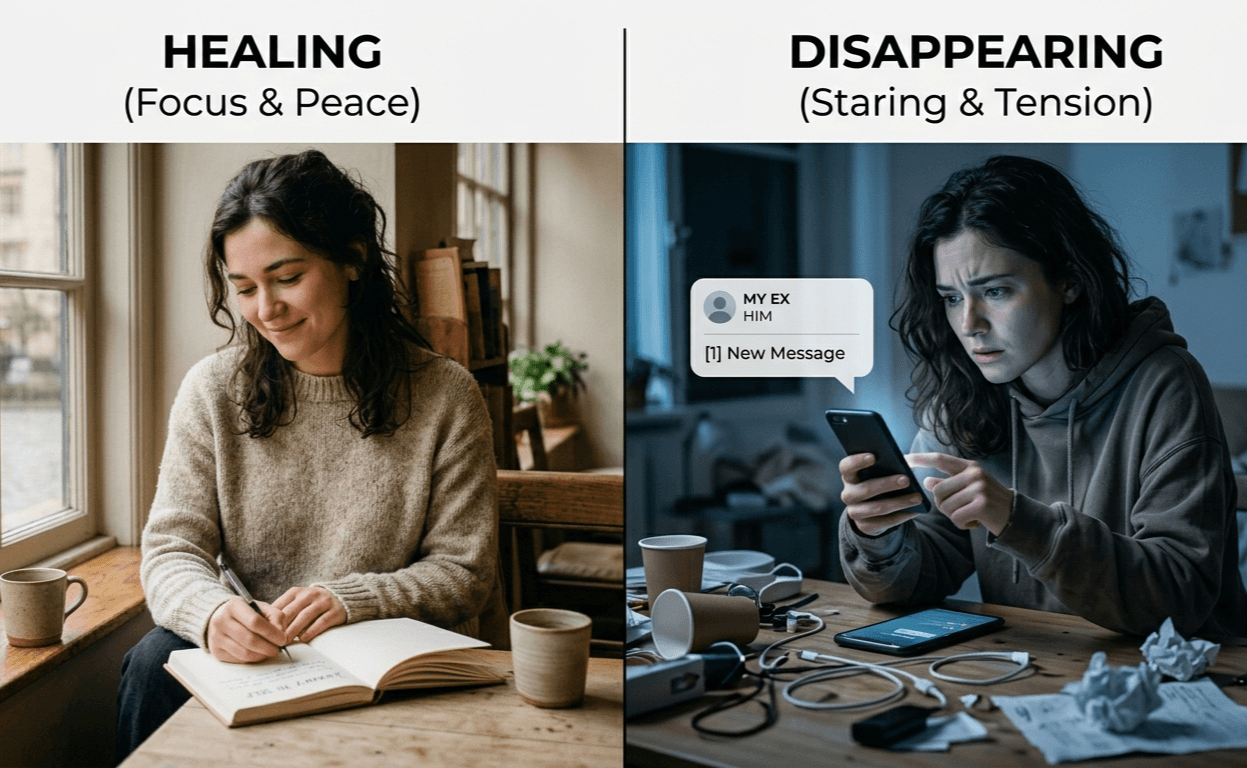
What No Contact Actually Is (And What It Isn't)
The no contact rule means cutting off all communication with your ex — no texts, no calls, no checking their Instagram at 3am — for a set period of time. Usually at least 30 days, often longer.
The goal isn't to punish them. It's to give yourself the space to stop reacting, start healing, and remember who you are outside of that relationship.
No contact is NOT:
A manipulation tactic to make them miss you (well, sometimes that's a bonus, but it's not the point)
A passive-aggressive punishment
Ghosting someone mid-relationship
A guarantee they'll come back
No contact IS:
A commitment to your own recovery
A boundary you set with yourself as much as with them
A proven way to break the trauma bond and interrupt the anxiety cycle
One of the most powerful tools for moving on after a breakup
If you're not sure how to actually start — what to do on day one, how to handle the urge to text, or what to focus on — our No Contact Starter Bundle walks you through exactly that, step by step, for the first 30 days.
What Ghosting Actually Is (And Why It Hurts So Much)
Ghosting is when someone you were dating — or even in a long-term relationship with — simply vanishes. No explanation. No closure. No "I think we should stop seeing each other." Just… nothing.
And it hurts in a very specific way, because your brain doesn't know how to process an open loop. When someone breaks up with you properly, you can grieve it. When someone ghosts you, your nervous system stays on high alert, waiting for an answer that never comes.
Research in psychology has connected ghosting to higher levels of anxiety, lower self-esteem, and prolonged rumination compared to more direct endings. Your brain literally cannot move on from something it never got to close.
Why Do People Ghost?
Usually, it's a combination of conflict avoidance, emotional immaturity, and — let's be honest — cowardice. Ghosting is the easy way out for the person doing it, and the hardest experience for the person receiving it.
It says nothing about your worth. It says everything about their communication skills.
The Core Difference: Who It's For
Here's the simplest way to understand it:
No Contact
Ghosting
Done after the relationship ends
Done while still in contact / dating
Both people know the relationship is over
One person is left confused and uninformed
Protects your healing
Protects the ghoster from discomfort
A conscious, self-loving decision
An avoidant, emotionally immature act
Empowers you to move on
Traps the other person in uncertainty
If You Were Ghosted — Here's What You Need to Hear
Being ghosted after a real relationship is one of the most disorienting experiences. You replay conversations. You look for signs you missed. You wonder if reaching out one more time would give you closure.
It won't. The closure has to come from you.
And ironically, the best thing you can do after being ghosted is to implement no contact on your own terms — not because they deserve it, but because you deserve to stop waiting. Stop checking. Stop hoping. Start healing.
Understanding what actually happens to your brain when you go no contact can help you stick with it. The science is genuinely fascinating — and reassuring. Read more in article No Contact & Your Brain: What Changes in 30 Days.

Using No Contact as a Healing Tool (Even After Ghosting)
Whether you were ghosted, had a messy breakup, or ended things yourself — no contact is one of the most effective tools for actually moving on.
Here's why it works:
It interrupts the anxiety cycle. Every time you check their profile or re-read old messages, you reset your nervous system back to day one.
It rebuilds your identity. When you stop focusing on them, you start reconnecting with yourself — what you like, what you want, who you are.
It gives your brain time to recalibrate. The emotional attachment you feel isn't just feelings — it's neurochemistry. No contact gives those pathways time to quiet down.
It protects your self-respect. Reaching out to someone who ghosted you or who clearly checked out rarely brings peace. Staying silent does.
What to Actually Do During No Contact
No contact isn't just about staying silent. It's about actively building a life that feels worth showing up for. Some things that genuinely help:
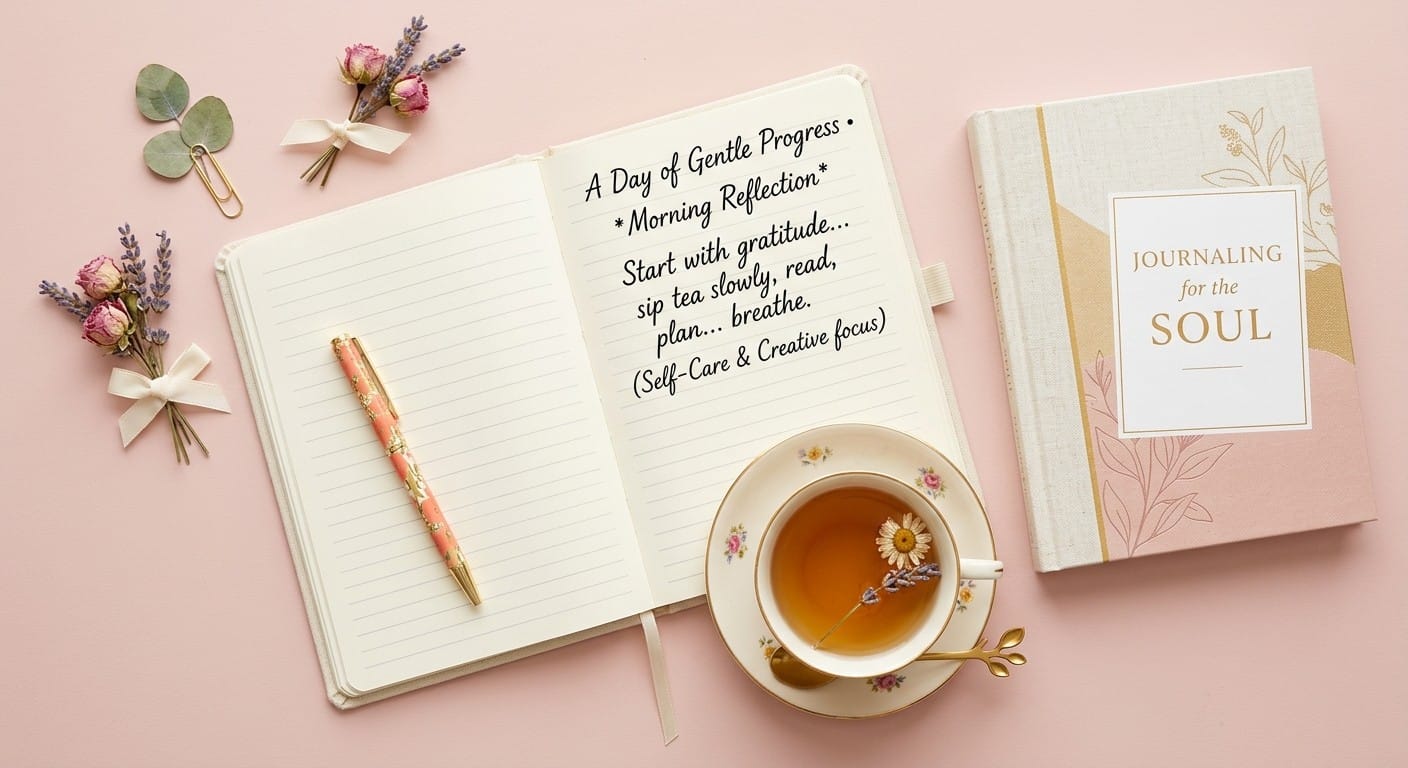
Journal the spiral out of your head and onto paper
Move your body — even just a walk counts
Read something that makes you feel less alone in this
Block, mute, or archive everything that keeps you stuck
Invest your time in something that's just yours
Books can be an unexpected source of comfort and perspective during this time. If you're looking for something to read that will actually help you process and heal, check out 10 Books That Will Help You Finally Let Go and Heal — the list is full of recommendations that feel like a conversation, not a lecture.
Common Misconceptions About No Contact
"No contact is the same as ghosting someone."
No. You are ending a relationship that has already been ended, or creating distance after a clear breakup. Ghosting is disappearing mid-connection without explanation. These are not the same thing.
"Going no contact means I'm playing games."
Protecting your mental health is not a game. Choosing not to stay in contact with someone who hurt you — or who you need distance from to heal — is a healthy, mature decision. Full stop.
"I should explain to them why I'm going no contact."
You don't owe an explanation, especially if they ghosted you. If you had a mutual breakup, a brief message letting them know you're going offline to focus on yourself is optional — but it's not required.
Moving On Is Not a Straight Line — But It Does Start With a Choice
Moving on after a breakup — especially one that ended with silence on either side — is rarely clean or linear. Some days you'll feel free. Other days, the smallest thing will send you back to the beginning.
That's normal. And it doesn't mean you're not healing.
What makes the difference is the choices you make consistently. And one of the most powerful choices you can make right now is to commit to no contact — not for them, not to make them miss you, but because you deserve a clear mind and a life that moves forward.
You've got this, sis.


